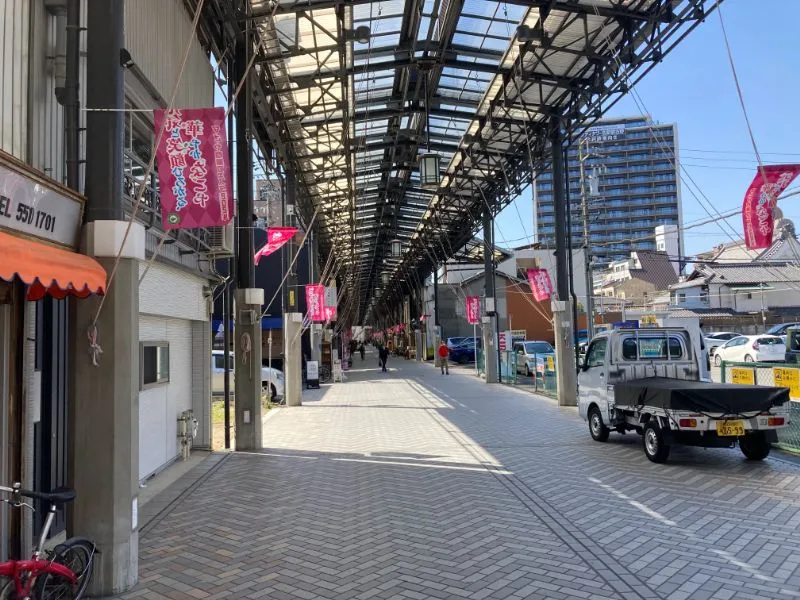
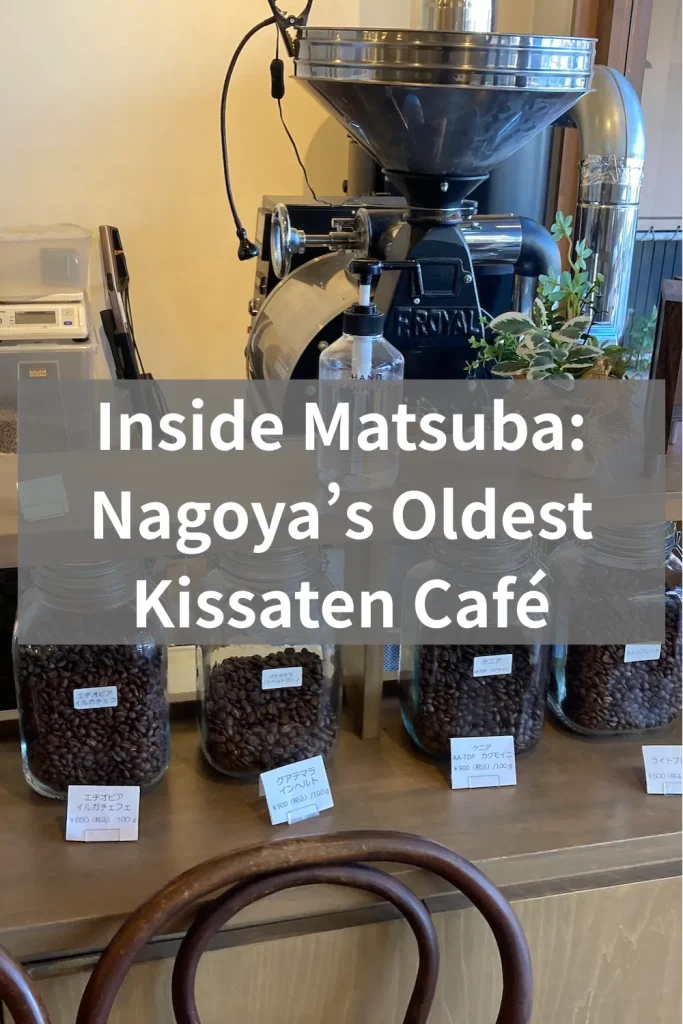
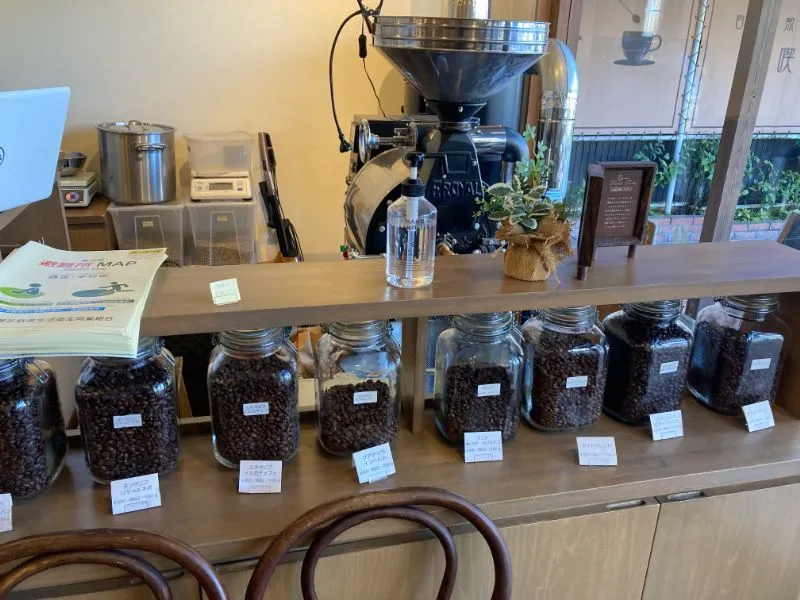
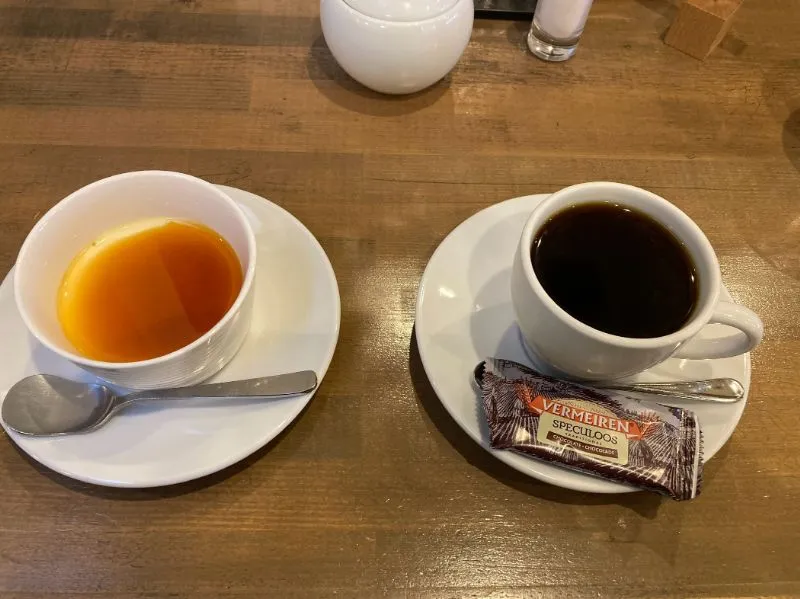
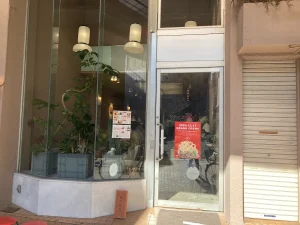
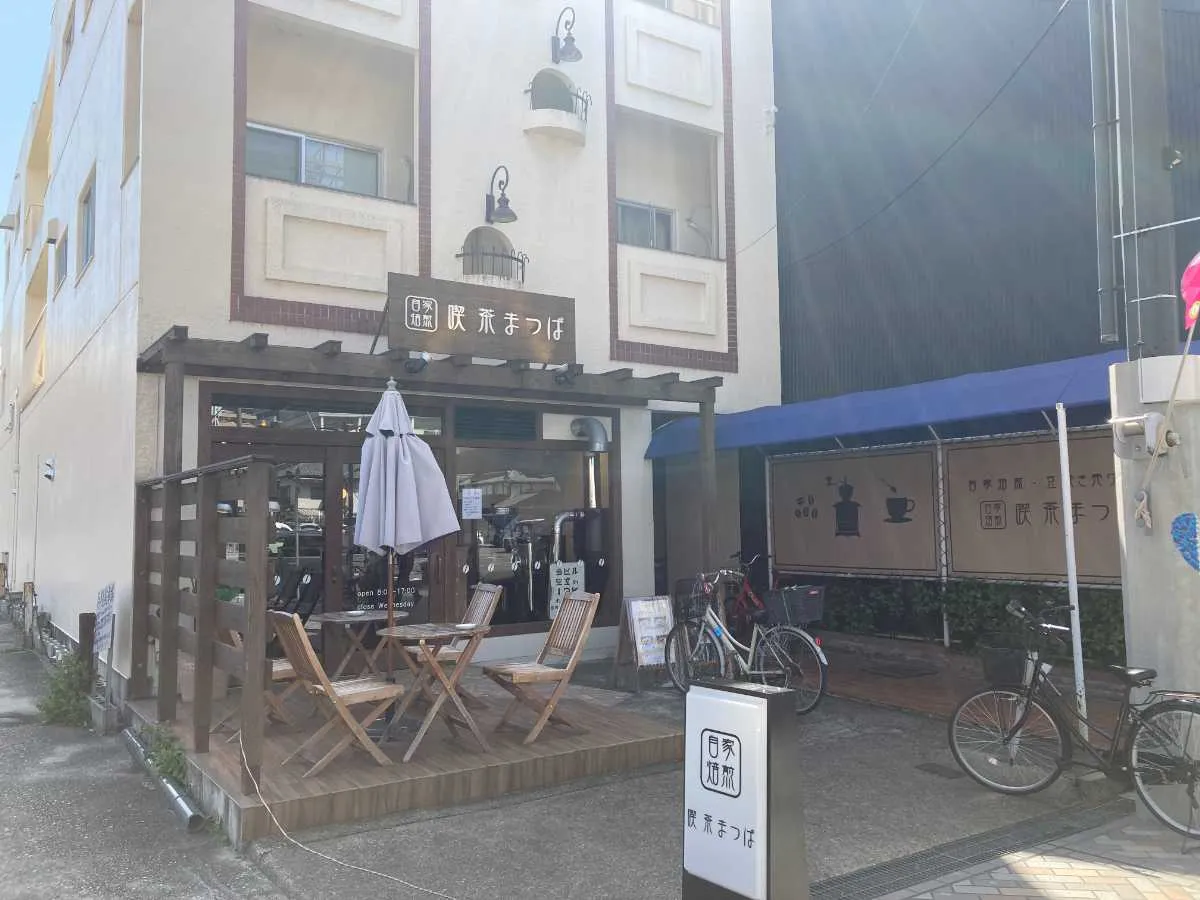
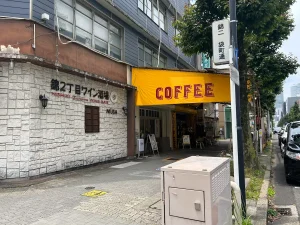
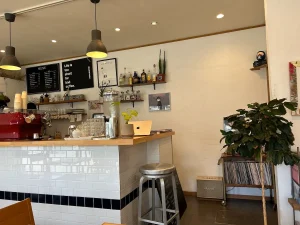
Matsuba: One of the Oldest Kissaten Cafes in Nagoya 2025 12/22 Cafe 22/12/2025 日本語版はこちら ContentsKissaten culture is originally from Ichinomiya, not Nagoya. </noscript><iframe data-src="https://www.google.com/maps/embed?pb=!1m18!1m12!1m3!1d104186.6889322726!2d136.79085840000002!3d35.31010524999999!2m3!1f0!2f0!3f0!3m2!1i1024!2i768!4f13.1!3m3!1m2!1s0x6003a728b9f933b9%3A0xcebee031018de6bf!2sIchinomiya%2C%20Aichi!5e0!3m2!1sen!2sjp!4v1712839060027!5m2!1sen!2sjp" width="600" height="450" style="border:0;" allowfullscreen="" loading="lazy" referrerpolicy="no-referrer-when-downgrade" class="lazyload" > I know that many readers are not very interested in detailed historical stories about Japan. However, in this blog, I intentionally include some background and details. Without them, the article would become just another shallow, textbook-like post written only to get page views and monetize—just like many other media outlets. First of all, let me explain what Kissaten (喫茶店) is.Kissaten literally means a coffee shop or café, but it is quite different from modern chain cafés like Starbucks. A Kissaten is usually an old, quiet café where locals—often elderly people—sit calmly, reading newspapers or books while drinking coffee. Nagoya has a particularly well-developed Kissaten culture and is famous for its “morning service.” The morning service typically includes toast, a boiled egg, and a cup of coffee, all for the price of a single coffee—around 500 yen. Many Japanese people believe this service originated in Nagoya, but in fact, it began in Ichinomiya City, located next to Nagoya. Ichinomiya used to be a thriving center of the cotton textile industry, with many factories operating in the area. Business negotiations related to textiles were often held at nearby Kissaten to avoid the noise of the factories. It is said that one coffee shop owner in Ichinomiya started offering small snacks to customers who were having business meetings, and this practice eventually evolved into what we now call the morning service. Later, the idea spread to Nagoya and became one of the city’s most well-known food cultures. Matsuba, which is introduced on this page, is often said to be the starting point of Nagoya’s Kissaten culture. About Matsuba Endoji Shopping Streets </noscript><iframe data-src="https://www.google.com/maps/embed?pb=!1m18!1m12!1m3!1d388.3450129002213!2d136.89202733729638!3d35.17611963577975!2m3!1f0!2f0!3f0!3m2!1i1024!2i768!4f13.1!3m3!1m2!1s0x600376dab7280f61%3A0x28f3d212559e9f03!2sMatsuba!5e0!3m2!1sen!2sjp!4v1712719535005!5m2!1sen!2sjp" width="600" height="450" style="border:0;" allowfullscreen="" loading="lazy" referrerpolicy="no-referrer-when-downgrade" class="lazyload" > Kissaten Matsuba is located on the east side of Endoji Shopping Street, an area close to popular tourist spots such as Shikemichi, within walking distance from Nagoya Station. Established in 1933, it is considered the oldest Kissaten in Nagoya and has long been loved by local residents. I visited Matsuba on a Saturday afternoon, and the café was already busy. There was only one seat available at the counter. Around me, elderly locals were quietly enjoying their coffee, some reading newspapers, others simply relaxing in silence. It felt like a scene that perfectly represents traditional Kissaten culture. Various types of coffee beans were displayed at the entrance, giving the shop a nostalgic atmosphere. I ordered a black coffee and pudding. The café is run by just two people—the owner and what seemed to be his wife—so it took a little time for the food and drinks to be served. However, this slow pace felt natural rather than inconvenient, adding to the charm of the place. Although Matsuba was founded in 1933, the interior has been renovated in recent years and is now clean and well maintained, while still preserving its classic atmosphere. Sitting there, I could truly feel the warmth of a coffee shop that has been cherished by the local community for generations. Place nearby あわせて読みたい Takanekoya – udon restaurant in Endoji shopping street あわせて読みたい Senshuji temple near Shikemichi Nagoya Our map I’ve compiled a list of Nagoya’s places that I’ve personally visited. Is Nagoya boring? Not at all! While it has developed as an industrial city, it also hides interesting places full of history and culture. Use this guide to explore Nagoya and discover its hidden gems. </noscript><iframe data-src="https://www.google.com/maps/d/u/1/embed?mid=16VlzhTVi_UPBU1Jsx9o-65vRrIg4SAM&ehbc=2E312F" width="640" height="480" class="lazyload" > Plan Your Nagoya Adventure Event Food & Drink Hotel Museum Temple Shrine Castle Park Cafe Copied the URL ! Copied the URL ! Related articles Poool: A Hidden Cafe with a Great View in The Landmark Nagoya Sakae 23/06/2026 Still Thinking Coffee Nagoya Review: Charcoal-Roasted Coffee in Fushimi 21/04/2026 A Hidden 100 Yen Café in Nagoya – Inside Prince Smart Inn Near Fushimi 07/03/2026 New PRONTO Cafe in Sakae, Nagoya – A Stylish Work-Friendly Spot with Wi-Fi and Power Outlets 24/02/2026 Best Work-Friendly Café in Fushimi, Nagoya: A Productive Day at DAYS CAFE 21/01/2026 A Cozy Coffee Break Near Endoji Shopping Street: Visiting Rows Coffee in Nagoya 21/01/2026 A Hidden Taiwanese Café in Nagoya: Enjoy Douhua Tofu Dessert and Authentic Taiwanese Tea at Mamehana Kanro 18/01/2026 Café Magnet in Mizuho Ward, Nagoya: A Quiet Neighborhood Cafe with Wi-Fi and Power Outlets 25/12/2025 LEAVE A REPLY To comment Cancel replyComment * Name * Email * Website Save my name, email, and website in this browser for the next time I comment.



LEAVE A REPLY